A food safety and quality assurance expert, Damilare Adeyemi, has emphasized that locally produced bacteriophages (phages) could play a vital role in reducing the burden of foodborne diseases in Nigeria.
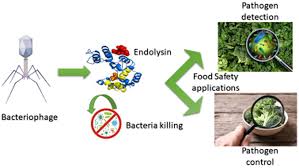
Speaking with The PUNCH, Adeyemi explained that phages are natural viruses that specifically attack and destroy harmful bacteria. Unlike antibiotics, they do not harm human cells or beneficial microbes, making them a safe and highly targeted tool in the fight against food contamination.
According to him, Africa faces a serious but solvable food safety challenge, especially in places where people buy and consume food daily—such as open markets, buka shops, and food processing factories.
“Phages, particularly polyvalent strains like KFS-EC3, represent a practical, science-driven, and locally developed solution,” he said. “They can make our food supply safer without driving up prices for consumers.”
By cutting down bacterial contamination, phages could help protect public health, support farmers and vendors, and build consumer trust in the safety of Nigerian food products.
“With just a clear regulatory framework, a few pilot projects, and investment in local manufacturing, Nigeria has the potential to lead Africa in adopting this 21st-century precision hygiene technology,” Adeyemi stated. “Our meals will not change in taste—but they will become significantly safer.”
He stressed that Africa currently bears the heaviest burden of foodborne diseases in the world, with the World Health Organisation (WHO) African Region estimating 91 million illnesses and 137,000 deaths every year linked to unsafe food.
In Nigeria, the impact is particularly alarming. Foodborne illnesses are believed to cost households and the healthcare system billions of dollars annually, with diarrhoeal diseases emerging as one of the leading culprits.
Adeyemi emphasized that locally developed phage solutions could drastically reduce this burden, improving both public health and economic stability.
Adeyemi noted that Nigeria is not starting from scratch when it comes to food safety. The country already has strong institutions in place, including the National Agency for Food and Drug Administration and Control (NAFDAC), the Standards Organisation of Nigeria (SON), and several state and local environmental health teams.
He explained that by 2024, Nigeria had also renewed its National Policy on Food Safety and Quality, complete with a comprehensive Implementation Plan (NPFSQIP 2023).
In addition, new Food Hygiene Regulations and Guidelines have been introduced, formalising important standards such as Hazard Analysis and Critical Control Points (HACCP), personal hygiene rules, and systems for complaints and recalls.
“On paper, Nigeria has a solid foundation,” he said. “The challenge is that enforcement remains inconsistent, and without consistent application, the best policies cannot fully protect public health.”
Adeyemi highlighted findings from a recent study on Nigeria’s food safety, which exposed challenges such as poor hygiene among food vendors, inconsistent standards in informal markets, pesticide residues on produce, and weak surveillance systems. He added that food governance is often fragmented, with overlapping mandates slowing down decisive action along the “farm-to-fork” chain.
He explained that in practical use, processors apply phages as a rinse, spray, or dip, which leaves no chemical residues, no change in flavour, and no alteration of texture, while effectively eliminating harmful bacteria on foods that are eaten raw or require little cooking.
Drawing from his MSc research in South Korea, Adeyemi shared how he successfully isolated and characterised a polyvalent lytic phage from slaughterhouse sewage. Unlike most phages that target only one bacterial group, this newly developed phage—named KFS-EC3—proved capable of infecting Escherichia coli O157:H7, Salmonella spp., and Shigella sonnei, three of the leading causes of severe diarrhoea globally.
The results were groundbreaking. KFS-EC3 demonstrated strong stability in harsh environmental conditions, maintained a high infection rate even at very low doses, and showed no genes linked to virulence, antibiotic resistance, lysogeny, or allergenicity. Its novelty and potential led to the granting of a patent for the research.
“What makes phages remarkable is their precision,” he explained. “They attack only the harmful bacteria while leaving beneficial microbes untouched. This makes them ideal for fresh produce, ready-to-eat meats, smoked fish, and salads—foods where there is no traditional ‘kill step’ such as boiling or thorough cooking. With KFS-EC3, a single phage spray can neutralize three major foodborne pathogens at once, offering both safety and confidence to consumers.”
Highlighting how Nigeria can successfully implement phage-enabled food safety, Adeyemi stressed the importance of leveraging the National Policy on Food Safety and Quality Implementation Plan (NPFSQIP 2023). He suggested that NAFDAC should develop clear guidelines recognising food-grade lytic phages as processing aids, in line with the US Department of Agriculture (USDA) and Food Safety and Inspection Service (FSIS) practices, where phages are already used on carcasses, trimmings, fresh produce, and ready-to-eat foods.
He further recommended the use of phage in wash water systems to cut down bacterial contamination while keeping food fresh. To ensure sustainability, he called for the establishment of GMP-grade phage production facilities in federal universities and biotech parks—an approach that would lower costs, guarantee a steady supply, and support the creation of a national phage bank tailored to Nigeria’s most common bacterial strains.
Adeyemi also underscored the need to link NCDC and NAFDAC laboratories with food processors so that outbreak strains can be genotyped, phage cocktails updated regularly, and effectiveness monitored. This, he said, would finally address the “data gap” that has been repeatedly highlighted in food safety reports.
“Phages should be presented as natural, safe, and residue-free, with clear communication that similar products are already approved by the USFDA and recognised by the USDA as processing aids,” he added.



No comment