
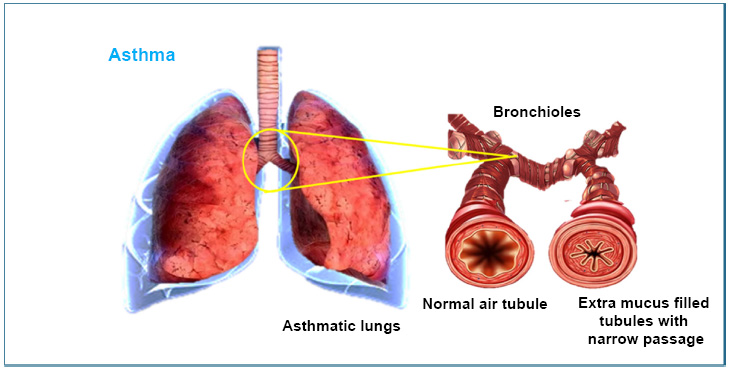
A natural compound discovered in African wormwood, a plant long used in traditional medicine, is showing exciting potential in the management of asthma. Scientists have found that this compound can help reduce airway inflammation, improve breathing, and support overall respiratory function, making it a promising addition to conventional asthma care.
Although researchers note that its potency still needs to be strengthened, early findings are encouraging. The compound has demonstrated the ability to not only ease breathing difficulties but also lower the frequency and severity of asthma attacks.
Moreover, African wormwood is rich in antioxidants, which help protect lung tissues from damage caused by oxidative stress. This means that, beyond providing relief, it could play a role in safeguarding long-term lung health and boosting the effectiveness of standard asthma treatments.
These discoveries highlight the power of African traditional medicine and its untapped potential to complement modern healthcare. With continued scientific study, African wormwood could become a valuable natural ally in the fight against asthma.
Educational for your audience?
Researchers have discovered promising evidence that a compound found in Artemisia afra, commonly known as African wormwood, may help in the fight against asthma. This plant, which has a long history of traditional use for treating various illnesses, is now gaining recognition in modern science. The findings were recently published in the journal Evidence-Based Complementary and Alternative Medicine.
The updated review examined a wide range of plants and herbal compounds with potential antiasthmatic effects. In total, 58 plants and 32 herbal extracts were identified as showing positive results that deserve further investigation. Some of the most notable include Nigella sativa (black seed), Adiantum capillus-veneris L. (fern), onion, garlic, frankincense, rapeseed, saffron, turmeric, eucalyptus, mango, mint, basil, moringa, and Anchomanes difformis.
In addition, the review highlighted 32 other plants with anti-inflammatory and antioxidative properties, as well as potential bronchodilator effects, making them strong candidates for asthma treatment research.
Interestingly, many of these natural remedies have been compared to conventional medicines currently used in clinical practice. Their primary mechanism of action appears to be the reduction of airway inflammation and oxidative stress, two major triggers of asthma symptoms.
These findings show how traditional medicinal plants—long trusted by communities—may hold the key to developing safer, more accessible treatments for asthma. Continued research into African wormwood and other powerful herbs could pave the way for innovative approaches to improving respiratory health worldwide.
Asthma is a chronic respiratory condition marked by inflammation and narrowing of the airways. This results in recurrent symptoms such as difficulty breathing, wheezing, coughing, and chest tightness. Managing asthma often requires a combination of medications and lifestyle adjustments. However, poor adherence to traditional treatments continues to pose challenges, leaving many patients and healthcare providers dissatisfied and highlighting the urgent need for new, effective therapies.
One area of growing interest is complementary and alternative medicine, particularly the use of herbal remedies. While many of these treatments have been practiced for centuries, their scientific validation is still limited. Among them, African wormwood (Artemisia afra) stands out for its long history of use in treating respiratory and infectious diseases.
Traditionally, African wormwood has been prepared in different forms—such as decoctions, infusions, poultices, or inhalants—to address a wide range of ailments. Its infusion or decoction mixed with honey or sugar to make a syrup is highly valued for relieving colds, flu, sore throats, pneumonia, asthma, whooping cough, bronchitis, and persistent coughs.
As an inhalant, the steam from boiled leaves is commonly inhaled to ease respiratory discomfort, while vapors from hot infusions have been used to soothe throat infections, such as in scarlet fever. Another traditional practice involves inserting fresh leaves directly into the nostrils to quickly clear nasal blockages.
Beyond asthma and related conditions, researchers are now exploring African wormwood’s potential in the fight against tuberculosis (TB). Laboratory studies suggest that compounds in the plant may help kill TB bacteria in both active and dormant states. The findings, recently published in the Journal of Ethnopharmacology, provide a promising foundation for developing new therapies. However, scientists stress that further research is needed to enhance the compound’s potency and ensure safety for widespread clinical use.
This growing body of evidence highlights the importance of combining traditional knowledge with modern science. African wormwood, once seen only as a household remedy, could one day become a vital tool in tackling serious respiratory illnesses worldwide.
A research team co-led by scientists from Penn State University has discovered that a chemical compound known as an O-methylflavone can kill the bacteria responsible for tuberculosis (TB) in both its active state and its slower, dormant state. This is a groundbreaking finding because the bacteria, Mycobacterium tuberculosis (Mtb), often survives for long periods in a stressed, low-oxygen condition, making it harder to eliminate with standard treatments.
Tuberculosis remains one of the deadliest infectious diseases in the world. Each year, nearly 10 million people develop the illness, and about 1.5 million lives are lost to it. Despite progress in medicine, TB continues to pose a global health challenge.
Although effective treatments are available, researchers highlight the major obstacles to curing TB. A typical antibiotic regimen lasts for six months, requiring patients to remain consistent with treatment. In cases where patients contract a drug-resistant strain, therapy can take up to two years, making treatment not only time-consuming but also costly and exhausting for patients.
The discovery of this compound offers new hope for developing shorter, more effective therapies that could change the fight against TB and save millions of lives worldwide.
In their study, researchers began by taking raw extracts of the African wormwood plant (Artemisia afra) and breaking them down into fractions—simpler chemical profiles separated from the whole extract. Each of these fractions was carefully tested against Mycobacterium tuberculosis (Mtb), the bacteria that causes tuberculosis, to determine which ones were effective and which were not. At the same time, scientists built a detailed chemical profile of each fraction to better understand their properties.
Through this process, the team identified a powerful compound that was able to kill the TB bacteria in both its active state and its inactive, dormant state. This discovery is particularly important because dormant TB bacteria are usually very hard to treat and often survive even after long courses of antibiotics.
Even more promising, when the compound was tested in a human cell model, it showed minimal toxicity, meaning it targeted the harmful bacteria without causing significant damage to healthy human cells.
This breakthrough suggests that African wormwood could hold the key to developing new, safer, and more effective TB treatments, offering hope in the global fight against one of the world’s deadliest infectious diseases.
The researchers emphasized that more studies are needed to fully explore the potential of African wormwood in treating tuberculosis (TB). They believe that additional molecules within the plant may also hold the ability to fight Mycobacterium tuberculosis, the deadly bacterium responsible for the disease.
According to Joshua Kellogg, co-corresponding author of the study and assistant professor of veterinary and biomedical sciences at Penn State’s College of Agricultural Sciences, the currently identified compound is not yet strong enough to be used directly as a TB treatment. However, he explained that it could serve as a starting point for developing stronger, more effective drugs.
Kellogg also noted that African wormwood contains other similar natural chemicals, which may share the same bacteria-killing properties. This means the plant could be a rich source of new drug candidates, opening the door to innovative therapies in the global fight against TB.
This discovery underscores the importance of bridging traditional medicine with modern science. What was once used as a household remedy could one day inspire powerful new treatments capable of saving millions of lives.



No comment