
INTRODUCTION
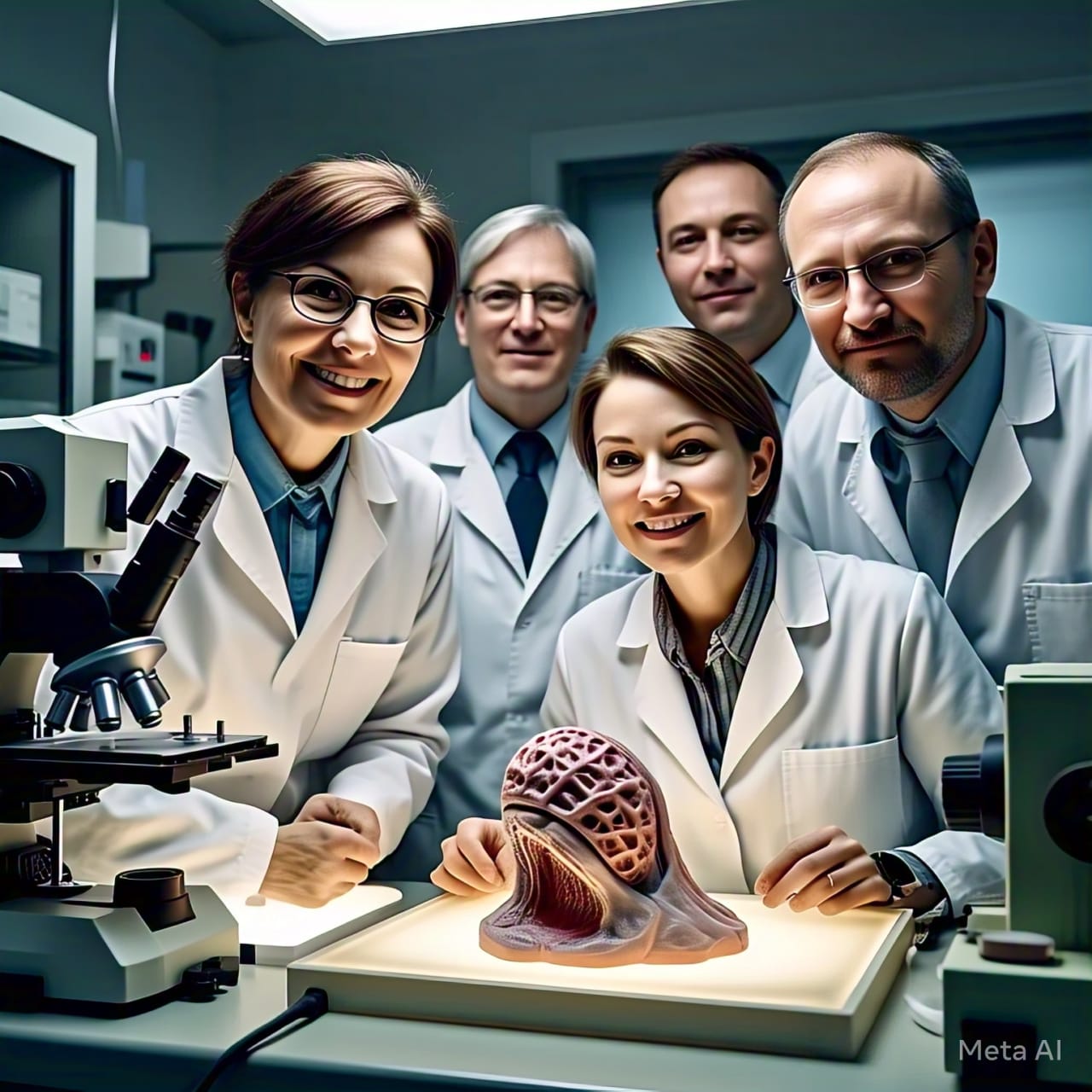
A revolutionary advancement in gastric cancer research is transforming the future of treatment. Scientists have successfully developed a cutting-edge 3D bio-printed gastric cancer model, unlocking new possibilities for understanding and treating this complex disease. This breakthrough marks a major leap forward in cancer research, bringing personalized medicine and targeted therapies closer than ever before.
LIMITATIONS OF TRADITIONAL CANCER MODELS
For years, researchers relied on conventional methods such as 2D cell cultures and animal models to study gastric cancer. However, these methods come with major limitations
1. LACK OF ACCURACY Traditional models often fail to replicate the intricate structure and behavior of human cancer.
2. INSUFFICIENT REPRESENTATION Many models do not account for the wide range of genetic variations and cancer subtypes, making treatments less effective.
HOW 3D BIO-PRINTING IS CHANGING THE GAME
3D bio-printing technology overcomes these challenges by offering a highly accurate and customizable approach to cancer research. Here’s why this innovation is a game-changer
1. REALISTIC TISSUE REPLICATION Unlike conventional models, 3D bio-printed structures closely mimic the actual tissue composition of human gastric cancer, allowing for more precise studies.
2. CUSTOMIZATION FOR INDIVIDUAL PATIENTS Scientists can now create models tailored to specific cancer subtypes and genetic profiles, leading to more effective personalized treatments.
3. IMPROVED DRUG TESTING The ability to test treatments on 3D models means researchers can evaluate drug responses more accurately, reducing the need for ineffective or harmful therapies.
REVOLUTIONIZING GASTRIC CANCER RESEARCH
The introduction of 3D bio-printed cancer models is reshaping the future of gastric cancer research in three key ways
1. DEEPER UNDERSTANDING OF CANCER PROGRESSION Researchers can now observe how gastric cancer develops and spreads in a controlled, human-like environment.
2. ADVANCEMENTS IN PERSONALIZED MEDICINE The ability to tailor cancer models to individual patients means treatments can be customized for better outcomes.
3. DEVELOPMENT OF MORE EFFECTIVE THERAPIES With more accurate models, scientists can test and refine new treatments faster, accelerating breakthroughs in cancer care.
THE FUTURE OF CANCER RESEARCH WITH 3D BIO-PRINTING
This cutting-edge innovation is just the beginning. As 3D bio-printing technology continues to evolve, it is expected to drive major advancements in cancer research and treatment
1. INTERDISCIPLINARY COLLABORATION Scientists, doctors, and engineers are working together to push the boundaries of cancer treatment.
2. FASTER DISCOVERY OF NEW THERAPIES With improved models, drug development and testing can be conducted with greater accuracy and efficiency.
3. BETTER PATIENT OUTCOMES Ultimately, this research will lead to groundbreaking treatments that improve survival rates and quality of life for patients worldwide.
A NEW HOPE FOR GASTRIC CANCER TREATMENT
The development of a 3D bio-printed gastric cancer model is a landmark achievement in medical research. By bridging the gap between laboratory studies and real-world treatments, this breakthrough is bringing hope to millions affected by gastric cancer. As research continues, the promise of more effective, personalized, and life-saving treatments becomes a reality.



No comment