INTRODUCTION
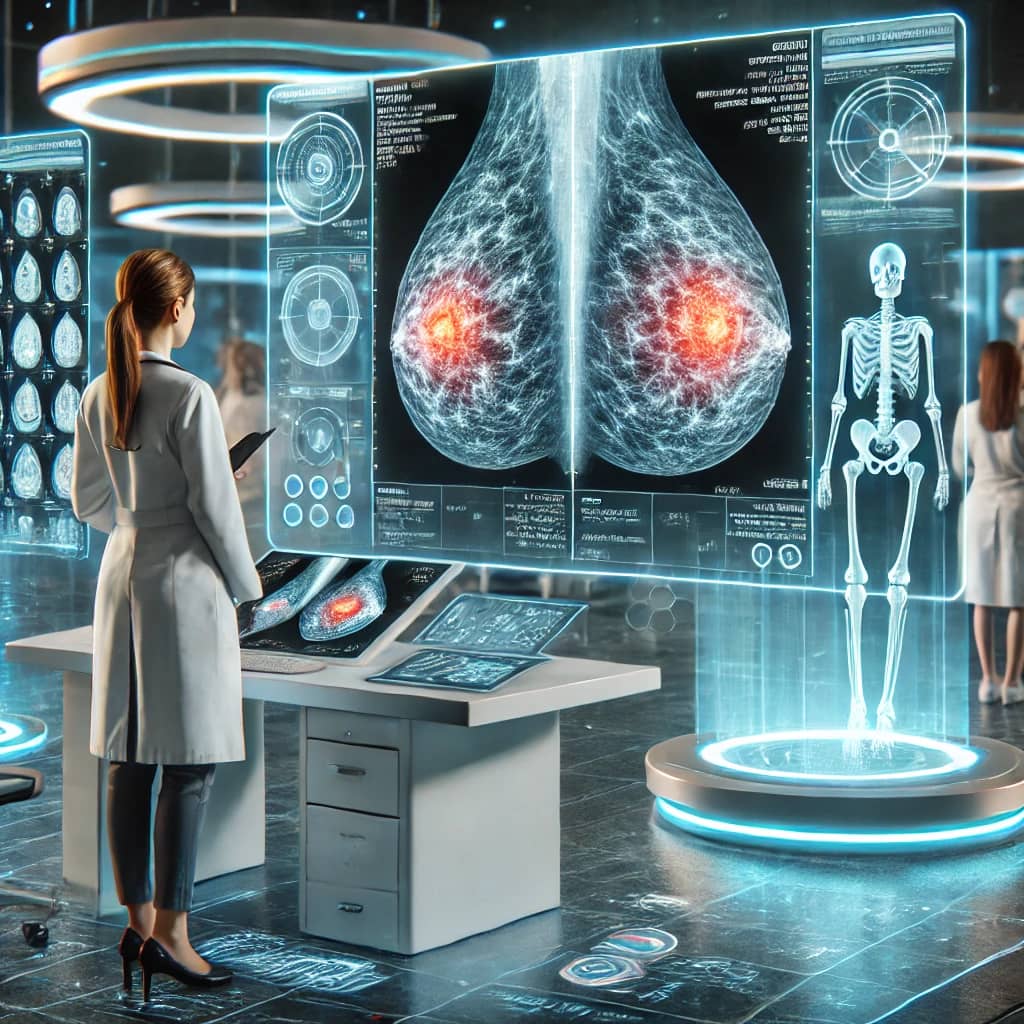
Breast cancer remains one of the leading causes of cancer-related deaths among women worldwide. Early detection is crucial, as it significantly improves survival rates. In a groundbreaking move, the UK’s National Health Service (NHS) has launched a major trial using artificial intelligence (AI) to enhance breast cancer screening. This initiative, involving 700,000 women, aims to improve both the speed and accuracy of diagnoses, addressing key challenges such as delayed detection and radiologist shortages.
HOW AI IS TRANSFORMING BREAST CANCER SCREENING
Traditional breast cancer screening relies on radiologists manually reviewing mammograms. However, this process can be time-consuming, and subtle signs of cancer may sometimes be overlooked. AI is set to revolutionize this approach by offering faster, more precise, and highly efficient analysis of mammograms.
1. Faster and More Accurate Detection AI-powered systems can scan thousands of mammograms within seconds, identifying even the faintest abnormalities that might be missed by the human eye. By analyzing vast datasets, AI enhances the accuracy of cancer detection, leading to earlier diagnoses and improved patient outcomes.
2. Reducing Radiologist Workload With an ongoing shortage of radiologists, many healthcare systems face increasing backlogs in breast cancer screening. AI serves as a crucial assistant, helping prioritize high-risk cases for further review. This significantly improves efficiency, ensuring that patients receive timely attention.
3. Improving Early Diagnosis and Survival Rates The earlier breast cancer is detected, the higher the chances of survival. Studies show that when breast cancer is diagnosed at Stage 1, survival rates exceed 90%. AI’s ability to detect early-stage abnormalities enhances the likelihood of timely interventions, potentially saving thousands of lives.
THE NHS £11 MILLION AI TRIAL: WHAT IT MEANS FOR PATIENTS
The NHS has invested £11 million into one of the largest AI-driven breast cancer screening trials in the world.
This initiative will evaluate AI’s potential to:
Enhance detection accuracy and reduce false positives.
Speed up the screening process and minimize patient waiting times.
Improve early cancer detection, leading to better treatment outcomes.
If the trial proves successful, AI-assisted screening could be rolled out nationwide, making the UK a global leader in AI-powered cancer diagnostics.
CAN AI REPLACE RADIOLOGISTS?
While AI is transforming breast cancer screening, it is not a replacement for human expertise. Instead, it acts as a powerful tool that assists radiologists, offering an additional layer of analysis to enhance diagnostic accuracy. Final diagnoses and treatment decisions will continue to be made by trained medical professionals. AI serves as a support system, reducing the workload while improving efficiency and reliability.
THE FUTURE OF AI IN HEALTHCARE
The integration of AI in breast cancer screening is just the beginning. This technology is expected to play a pivotal role in diagnosing various other cancers, analyzing medical images, and predicting disease risks based on patient history. By incorporating AI-driven solutions, healthcare systems can become more efficient, leading to faster diagnoses, earlier treatments, and ultimately, better patient survival rates.
TAKE ACTION: EARLY DETECTION SAVES LIVES
If you are eligible for breast cancer screening, do not delay—schedule your appointment today. Stay informed about advancements in AI-powered healthcare and support initiatives that improve early cancer detection. The NHS’s investment in AI represents a bold step toward a future where breast cancer is detected faster, treated earlier, and prevented more effectively.



No comment